A "natural" or "additive-free" food claim is substantiated by combining production records with batch-linked measurement, and in Türkiye the wording itself is tightly limited. "100% natural" and "100% additive-free" may not be used on labels, in promotion or in advertising. "Natural" is reserved for single-ingredient foods with no added ingredients and no significant change to their natural structure, and "additive-free" requires that additives are permitted in that food and that none carry over from ingredients. Products not complying with the Ministry of Agriculture and Forestry's guide may not be on the market after 31 December 2026.
Where do these rules come from?
The framework is the Turkish Food Codex Regulation on Food Labelling and Consumer Information and its guide. The guide was reissued on 26 November 2024 and last revised on 10 March 2026. It is not limited to labels; it also covers terms used in promotion, presentation and advertising. According to the Ministry's letter to the sector, operators must also comply with the guide, and foods without a compliant label may not be on the market after 31 December 2026, whatever their remaining shelf life.
On the advertising side, Article 9 of the Regulation on Commercial Advertising and Unfair Commercial Practices applies. Advertisers must prove their claims, and verifiable claims must be backed by scientifically valid information and documents. The article expects reports to prove the claim for the period in which the advertisement runs, which is why one report obtained years ago carries little weight. Article 24 of Law No. 5996 also bans labels, promotion and advertising that mislead consumers, and Article 40 adds an administrative sanction when a label declaration does not match the product's content and analytical values.
Which wordings are no longer allowed?
Direct examples from the guide:
- The "natural" family: "100% natural", "real natural", "genuine natural", "most natural", "completely natural" (arts. 3.3, 9)
- Single-ingredient emphasis in a mixed product: "natural cherry" on a cherry cake if the cake itself fails the natural criteria (art. 3.4)
- The "additive-free" family: "100% additive-free", "completely additive-free", "most additive-free", "no additives whatsoever" (art. 13.2)
- Negative claims: "no artificial colours", "no flavourings", "no monosodium glutamate added" (arts. 13.6, 13.7)
- "Pure" and "genuine": "pure olive oil", "genuine honey", "real chocolate" (arts. 4, 8.1)
"100%" is not banned outright. The guide allows wording such as "100% coffee" for single-ingredient products that could be confused with similar foods (art. 9.2). This distinction is the one label reviews miss most often.
What evidence does each claim need?
| Claim | Condition in the guide | Records | Role of measurement |
|---|---|---|---|
| "Natural" | Single ingredient, nothing added; only physical, enzymatic or microbiological processing (art. 3.1) | Recipe, process records, supplier specification | Batch matches reference profile; targeted analysis if blending is suspected |
| "Made from natural ingredients" | All ingredients meet the natural criteria; the word "natural" not emphasised (art. 3.2) | Ingredient-level records | Intake measurement on risky materials |
| "Additive-free" | Additives permitted in the food, and none carried over (art. 13.1) | Recipe and carry-over declaration for all raw materials | Targeted analysis for expected additive groups |
| "No colourants" | Class permitted, not used, not carried over (art. 13.3) | Recipe, raw material declarations | Targeted colourant analysis |
| Food where additives are not permitted | Only the form "under the Turkish Food Codex ... contains no additives" (art. 13.4) | Legal basis | Analysis per the product communiqué |
| "100% coffee" type | Single ingredient, risk of confusion with similar products (art. 9.2) | Recipe | Composition consistent with the declared product |
| "Premium", "quality" type | Must be provable and explained on the label (arts. 11.4, 11.5) | Producer records | The parameter concerned, if measurable |
The split in this table matters. Most of a "natural" claim rests on production knowledge, and composition measurement cannot prove it alone. What measurement does is strengthen the evidence that a batch matches the declared product and that nothing undeclared has been mixed in. The same care applies to "additive-free": a negative result means "below the method's limit of quantification", not "absent", and it applies only to the substances tested.
How do you build the evidence file?
- Inventory the claims. List every wording and image on packaging, website, marketplace listings, social media and advertising. Brand-name use is assessed separately; the guide distinguishes brand and product name for "pure" (art. 4).
- Map them to the guide. Sort each wording into "not allowed", "conditional" and "free to use". Check special labelling provisions in the product communiqué too.
- Interrogate carry-over. Raw materials are the weak link of an "additive-free" claim. Ask suppliers of spices, flavourings, oils and powdered ingredients for additive declarations.
- Plan measurement. Measure the risky raw materials behind the claim and finished batches at set intervals. Read supplier declarations using our certificate of analysis checklist.
- Tie it to batches. Because of the advertising rule's period-based proof, reports should show which batch and period they cover. For how samples are taken, see sampling validity.
- Renew on change. Reassess the claim when the recipe, supplier or process changes.
- Plan label stock. With 31 December 2026 as the deadline, schedule production and printing so that no old-label product remains on shelves by then.
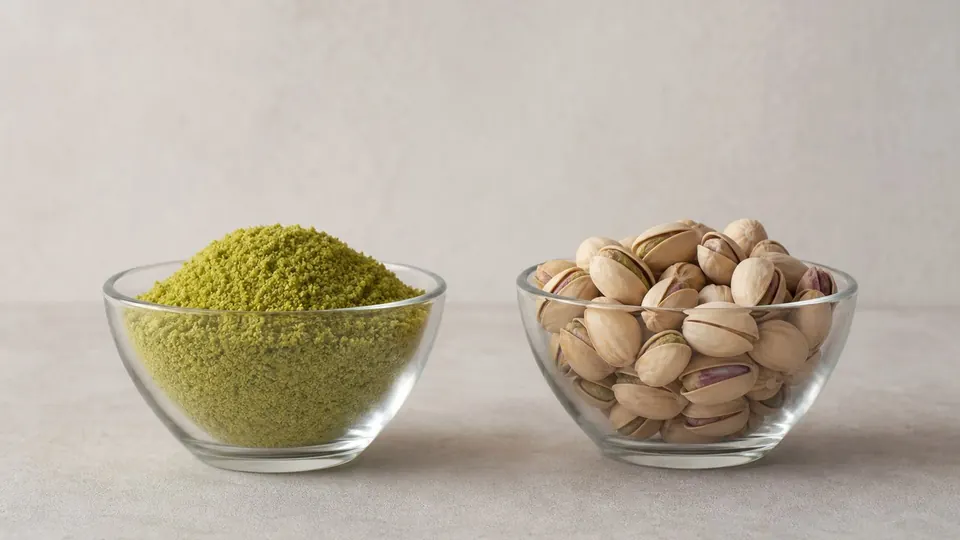
The Turkish Advertising Board's 13 August 2026 meeting shows why the file should be ready. According to the Ministry of Trade's announcement, the Board decided 105 files and imposed sanctions in 87, including one on misleading images on a dessert's packaging. Peanut at 49.5% was absent from the images, while the highlighted hazelnut, pistachio and apricot kernel stood at 4%, 3% and 3%.
Where does Molevex fit in this file?
Molevex does not decide whether a claim is legally compliant; that assessment belongs to your quality and legal teams. What it does is measure the product's own composition without adding anything, compare it with a sample you know to be correct, and finalise the result in the laboratory. The result is tied to its batch and becomes a report you can give an auditor. This record sits alongside recipe and process records and does not replace them. See the food page for more.
Sources
- Ministry of Agriculture and Forestry, Guide to the Turkish Food Codex Food Labelling Regulation, Revision 002, 10 March 2026 (KAYSİS, in Turkish)
- Ministry of Agriculture and Forestry, guide update announcement, 27 November 2024 (in Turkish)
- Provincial Directorate of Agriculture and Forestry (Düzce), labelling and other regulatory changes, 2026 (in Turkish)
- TESK, Circular 2026/69 relaying the Ministry's letter, 9 April 2026 (in Turkish)
- Regulation on Commercial Advertising and Unfair Commercial Practices, current text (in Turkish)
- Law No. 5996 on Veterinary Services, Plant Health, Food and Feed (in Turkish)
- Ministry of Trade, Advertising Board 372nd meeting announcement, 19 August 2026 (in Turkish)